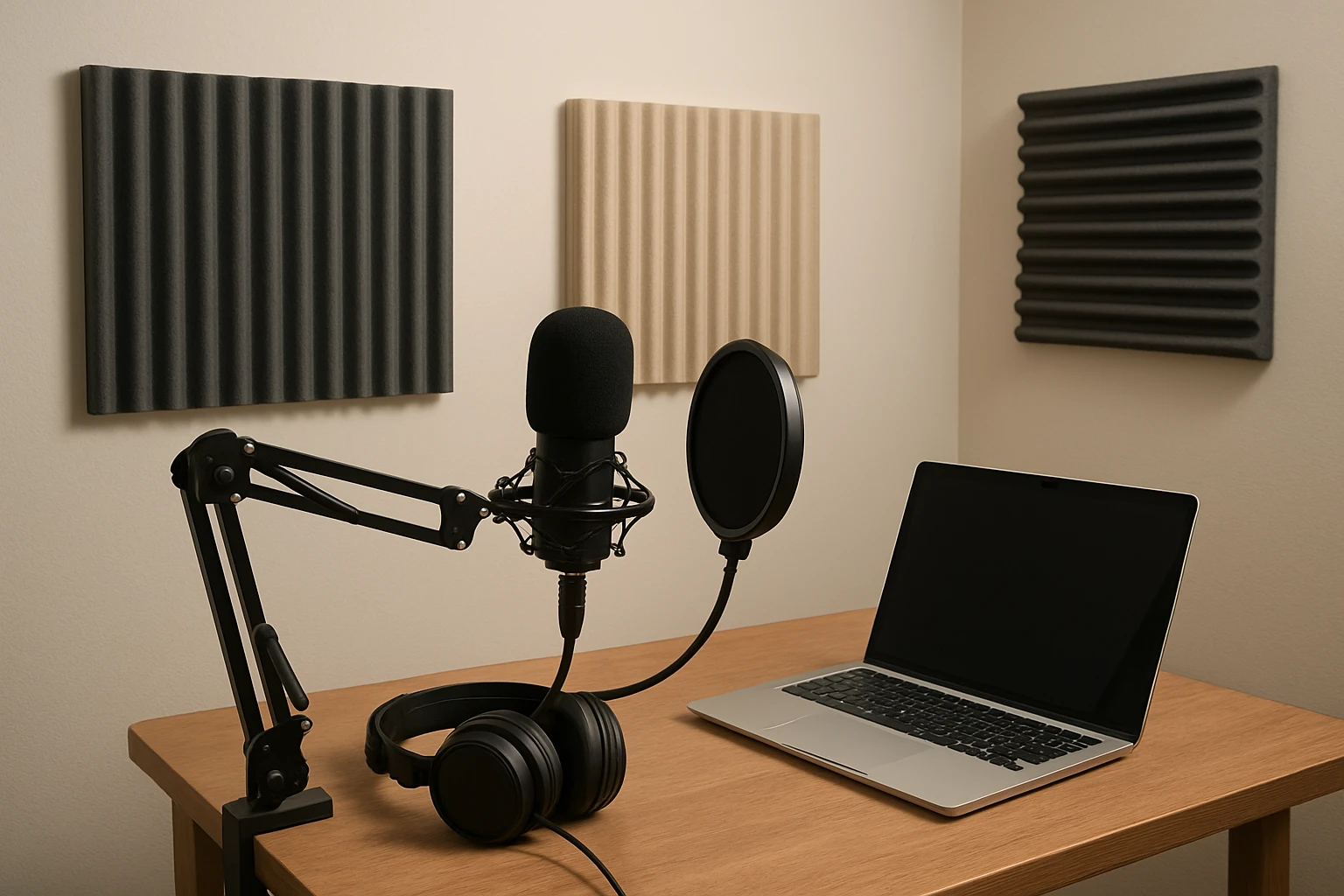
How to DIY Acoustic Treatment for Small Podcast Rooms: Step‑by‑Step, Budget‑Friendly Guide to Clearer, Professional Sound
Introduction
In this guide one will discover how to transform a modest podcast space into an environment that captures clear, professional‑grade audio. The reader will learn how to evaluate acoustic problems, select cost‑effective treatment solutions, and install them with confidence. Each step includes practical instructions and product recommendations that balance performance with affordability. By the end of the article the podcast creator will possess a room that reduces echo, controls unwanted reflections, and delivers a polished listening experience.
What You’ll Need
- Broadband absorption panels such as SD SODOCT Acoustic Foam Panels
- Self‑adhesive wall panels like TONOR Self‑Adhesive Acoustic Wall Panels
- Additional foam wedges from Focusound Acoustic Foam Panels
- Microphone isolation shield such as XTUGA Microphone Isolation Shield
- Construction adhesive or double‑sided tape, a measuring tape, a level, a utility knife, and a pencil for marking.
Step 1: Assess the Room
The first task is to identify the acoustic shortcomings of the existing space. One should listen for flutter echoes, standing waves, and excessive reverberation by speaking or clapping in different corners while recording a short test clip. Document the locations where sound appears boomy or thin, and note any hard surfaces such as windows, bare walls, or reflective ceilings. This assessment creates a roadmap that guides the placement of treatment materials and prevents unnecessary purchases.
Step 2: Plan the Treatment Layout
After the acoustic audit one can sketch a simple floor plan that marks speaker and microphone positions, as well as the primary reflection points. The most common first‑reflection zones are located at the points where sound from the microphone reaches the walls and returns within 1‑2 meters. By placing broadband absorbers at these zones one can dramatically reduce early reflections. Use graph paper or a digital layout tool to allocate space for panels, ensuring a balanced distribution that maintains visual aesthetics.
Step 3: Install Broadband Absorption Panels
Broadband panels address a wide frequency range and are essential for eliminating mid‑range echo. The SD SODOCT Acoustic Foam Panels provide a high Noise Reduction Coefficient, are fire‑resistant, and feature a pyramid shape that maximizes surface area for diffusion. Each panel measures 12" x 12" x 2" and costs $37.99 for a 24‑pack, with a rating of 4.0 out of 5 based on 3,193 reviews. To install, clean the wall surface, apply construction adhesive or nano double‑sided tape, and press the panel firmly for 30 seconds. Position the panels at ear level on the side walls and directly behind the microphone to intercept reflections from the rear wall. The lightweight design simplifies mounting without professional assistance.
For larger surface areas, the TONOR Self‑Adhesive Acoustic Wall Panels offer a dual‑layer thickened structure that improves absorption compared with single‑layer foam. Each panel measures 47.2" x 23.6" x 0.72" and costs $109.99 for a four‑pack, earning a 4.4 rating from 1,036 reviewers. The peel‑and‑stick backing eliminates the need for additional adhesives, making installation quick and clean. Align the panels in a staggered pattern on the ceiling or on the upper portion of the walls to treat high‑frequency reflections that often cause a thin sounding voice. The classic stripe pattern also adds a decorative element that blends with modern studio aesthetics.
Step 4: Add Targeted Bass Traps (Optional)
Low‑frequency buildup is common in small rooms, and while broadband panels address most frequencies, dedicated bass traps can further smooth the response. The Focusound Acoustic Foam Panels include triangular grooves that enhance density and come with 240 pieces of double‑sided adhesive tape. Priced at $29.98 for a 24‑pack and rated 3.9 out of 5 by 4,423 reviewers, they provide a cost‑effective solution for corner treatment. Apply the adhesive tape to the back of each panel and affix them in the room corners where low‑frequency energy tends to accumulate. If the foam does not fully recover its shape after installation, a brief soak in water followed by air drying will restore its form within 24‑48 hours.
When installing bass traps, ensure that the panels are flush with the wall surface to avoid gaps that could leak sound. Use a level to verify that each panel is straight, and trim any excess material with a utility knife for a perfect fit around outlets or light switches. By combining broadband panels with targeted bass traps one creates a balanced acoustic environment that supports both spoken word clarity and musical accompaniment.
Step 5: Position the Microphone Isolation Shield
The final element in a podcast‑friendly room is a dedicated microphone shield that isolates the source from residual room reflections. The XTUGA Microphone Isolation Shield features five high‑density foam panels, a foldable top, and adjustable arch design that can be mounted on a desktop or microphone stand. It is priced at $46.99, carries a 4.3 rating from 1,055 reviewers, and reduces interference by up to 30 percent according to user feedback. Assemble the shield by connecting the panels with the supplied bolts, adjust the angle to face the microphone, and secure it on a sturdy stand.
Place the shield directly in front of the microphone, leaving a small gap between the foam and the mic capsule to prevent airflow blockage. The multi‑layer construction absorbs rear and side reflections, resulting in a smoother vocal tone with reduced room coloration. For podcasters who use a pop filter, position the filter inside the shield to benefit from both devices simultaneously. The shield’s portable design also allows relocation to different recording setups without permanent modifications to the room.
Tips & Pro Tips
- Measure the room dimensions before purchasing panels to avoid excess inventory.
- Apply a thin layer of spray adhesive to the back of the SD SODOCT Acoustic Foam Panels if the included tape does not provide sufficient hold.
- When using the TONOR Self‑Adhesive Acoustic Wall Panels, cut around power outlets with a sharp utility knife and a straight edge to maintain a clean appearance.
- Rotate the pyramid panels periodically to prevent foam compression in high‑traffic areas.
- Combine acoustic treatment with a low‑noise microphone and proper gain staging for optimal results.
Troubleshooting
If echo persists after installing the recommended panels, re‑evaluate the placement of first‑reflection absorbers and add additional panels to uncovered wall sections. A common mistake is positioning panels too high or too low relative to the microphone height; adjust them to be at ear level for maximum effectiveness. Should the TONAR panels lose adhesion over time, replace the adhesive with a removable mounting putty that does not damage paint. For bass‑trap issues, verify that the panels are installed in the corners and not merely on flat wall surfaces, as corners provide the most acoustic gain for low frequencies.
Conclusion
This guide has outlined a systematic approach to treating a small podcast room with budget‑friendly acoustic products. By assessing the space, planning a layout, installing broadband absorbers, optionally adding bass traps, and employing a microphone isolation shield, one can achieve clear, professional‑sounding recordings without extensive construction. The recommended items—SD SODOCT Acoustic Foam Panels, TONOR Self‑Adhesive Acoustic Wall Panels, Focusound Acoustic Foam Panels, and XTUGA Microphone Isolation Shield provide reliable performance at reasonable cost. Implement the steps, experiment with placement, and enjoy the audible improvement in every episode.
Products Mentioned in This Guide
Frequently Asked Questions
What are the most important acoustic problems in a small podcast room?
Small rooms often suffer from excessive reflections, standing waves, and flutter echo, which cause muddiness and harshness in recordings.
Can I improve room acoustics on a tight budget?
Yes, using affordable broadband foam panels, self‑adhesive wall tiles, and DIY bass traps can dramatically reduce echo without high costs.
Where should I place acoustic panels for maximum effect?
Mount panels at first‑reflection points on the walls and ceiling, and add bass traps in corners to control low‑frequency buildup.
Do I need professional help to install acoustic treatment?
No, most DIY panels are lightweight and self‑adhesive, allowing a one‑person installation with basic tools like a measuring tape and level.
How can I test the acoustic improvements after installation?
Record a short voice sample and listen for reduced reverb, or use a free room‑analysis app to visualize frequency response changes.