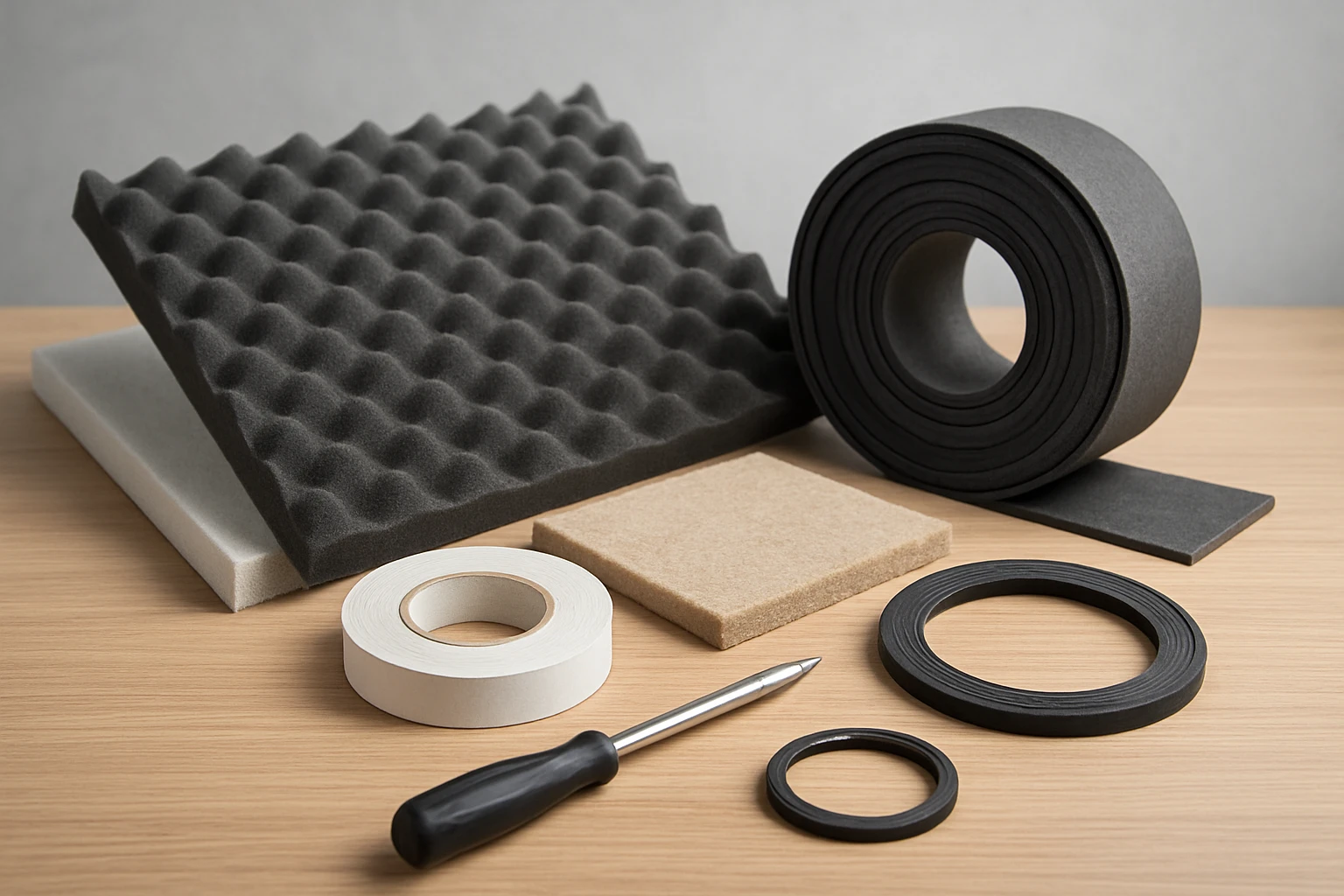
Landlord‑Friendly Soundproofing Kits for Apartments: The Ultimate Guide to No‑Drill, No‑Damage Noise Control
Introduction
Landlords frequently encounter tenant complaints about noise transmission between units. This guide explains how to achieve effective acoustic treatment without drilling, painting, or otherwise damaging walls, ceilings, or floors. Readers will learn foundational sound principles, evaluate four market‑tested products, and receive actionable best‑practice recommendations. By the end of the article, landlords will be equipped to select, install, and maintain a noise‑control solution that preserves property integrity and tenant satisfaction.
Background and Context
Sound travels as pressure waves that reflect, absorb, or transmit through building materials. In typical multifamily construction, thin drywall, concrete slabs, and hollow‑core doors provide limited acoustic isolation, allowing speech, music, and footfall to cross boundaries. Effective mitigation requires increasing absorption (to reduce reverberation) and adding mass or damping (to block transmission). Because many leases prohibit permanent alterations, the most viable approach relies on removable, self‑adhesive, or lightweight panels that can be installed and removed without leaving marks.
Key acoustic metrics include the Noise Reduction Coefficient (NRC), which rates a material’s ability to absorb sound, and the Sound Transmission Class (STC), which rates how well a partition blocks sound. While full‑scale construction can achieve high STC values, portable kits typically target NRC values between 0.4 and 0.95, sufficient to tame echo and reduce airborne noise in home studios, gaming rooms, and shared living spaces.
Product Categories and Recommendations
The market offers several categories of no‑drill acoustic solutions: foam wedge panels, self‑adhesive fabric panels, and multifunctional curtains. Each category addresses a specific set of challenges, such as wall‑mounted absorption, decorative appeal, or combined light‑blocking and sound‑dampening. The following sections present the most highly rated options, describe their technical attributes, and explain where they add the most value.
Foam Wedge Panels
The first category comprises polyurethane foam panels that attach to walls using double‑sided tape or removable hooks. These panels excel at reducing mid‑range frequencies and are popular among musicians, podcasters, and gamers.
- Focusound Acoustic Foam Panels – 48‑piece kit, 1" × 12" × 12", density 25 kg/m³, NRC ≈ 0.9, rating 4.5/5 from 19 reviews, price $39.99.
- XIN&LOG Acoustic Foam Panels – 52‑piece kit, 12" × 12" × 1", overall NRC 0.4, rating 4.1/5 from 3,949 reviews, price $30.99.
Focusound’s panels are high‑density foam with flame‑retardant properties, making them safe for children’s rooms and pet areas. They recover their original thickness within 24–48 hours after unpacking, and they can be accelerated by a brief water soak. XIN&LOG panels emphasize a wavy triangle shape that disperses sound evenly and are marketed for small‑to‑medium rooms such as home studios and karaoke spaces.
Self‑Adhesive Fabric Panels
Fabric‑based panels provide both acoustic absorption and decorative surface finish. Their self‑adhesive backing eliminates the need for nails, screws, or additional tapes, which satisfies most lease agreements.
- ROOME Self‑Adhesive Acoustic Panels – 22‑piece pack, 12" × 12" × 0.4", polyester fiber, absorption coefficient 0.95, rating 4.3/5 from 481 reviews, price $79.95.
ROOME panels combine a beveled edge design with a multi‑line pattern that can be arranged into pinwheel or ring motifs, offering both acoustic performance and visual interest. The panels adhere directly to painted walls, glass, wood, and metal surfaces, and they can be removed without residue by gently peeling.
Multifunctional Room‑Divider Curtains
Curtains that block light, reduce temperature exchange, and absorb sound are ideal for landlords who need a versatile, non‑permanent solution. Heavy, triple‑woven polyester fabric provides a measurable reduction in airborne noise while also delivering total blackout.
- MaKefeile Room Divider Curtain – 8.3 ft × 7 ft panel, 100 % polyester, blackout rating 100 %, sound absorption 25 % higher than standard curtains, rating 4.5/5 from 762 reviews, price $46.99.
The curtain’s three‑layer construction adds thermal insulation, which can lower heating and cooling costs for tenants. Its grommet‑based hanging system works on both ceiling tracks and traditional curtain rods, allowing landlords to install the product in a variety of window and doorway configurations without drilling.
Comparison and Selection Guide
| Product | Key Strength | Best Use Case | Price per Unit | Rating |
|---|---|---|---|---|
| Focusound Acoustic Foam Panels | High density, flame‑retardant, fast recovery | Music studios, gaming rooms, children’s bedrooms | $0.83 per panel | 4.5/5 |
| XIN&LOG Acoustic Foam Panels | Economical, vibrant colors, easy compression recovery | Home offices, small studios, streaming setups | $0.60 per panel | 4.1/5 |
| ROOME Self‑Adhesive Acoustic Panels | Self‑adhesive, decorative patterns, 0.95 absorption coefficient | Professional studios, podcast rooms, aesthetic‑focused rentals | $3.64 per panel | 4.3/5 |
| MaKefeile Room Divider Curtain | Total blackout, thermal insulation, 25 % better sound absorption than standard curtains | Studio apartments, dormitories, shared living spaces | $46.99 per panel | 4.5/5 |
When selecting a kit, landlords should prioritize fire safety, ease of removal, and tenant aesthetic preferences. High‑density foam offers superior absorption but may be less decorative than fabric panels. Curtains provide multifunctionality at a modest cost but require a window or track for installation. The table above assists landlords in matching product strengths to specific rental scenarios.
Best Practices and Installation Tips
- Assess the Noise Source. Identify whether the dominant issue is airborne sound (speech, music) or impact noise (footsteps). Airborne problems benefit most from wall‑mounted foam or fabric panels, while impact noise may require floor underlayment or heavy curtains.
- Measure Wall Space Accurately. Calculate the total square footage of the area to be treated. A coverage rate of 20‑30 % of wall area typically yields noticeable reduction in echo without over‑loading the room.
- Use Manufacturer‑Recommended Adhesives. For Focusound panels, apply the recommended double‑sided tape (ASIN B0FMGMM9YC) to ensure a secure yet removable bond. ROOME panels adhere directly without additional tape, but a light press is advisable for maximum contact.
- Arrange Panels Strategically. Place panels at first‑reflection points—typically directly opposite the sound source and at ear level. For rectangular rooms, a staggered “brick” pattern distributes absorption evenly.
- Combine Products for Synergy. Pair a curtain such as the MaKefeile Room Divider with foam panels on adjacent walls to achieve both thermal comfort and acoustic control.
- Document Installation. Take photographs before and after installation. This documentation protects landlords against disputes regarding property condition at lease termination.
Frequently Asked Questions
Can I install acoustic panels without damaging paint?
Yes. Self‑adhesive panels like ROOME attach directly to painted surfaces and can be removed by gently peeling. Foam panels require removable double‑sided tape, which leaves no residue when taken off carefully.
Do these products improve soundproofing or just sound absorption?
Most kits primarily increase sound absorption, reducing echo and reverberation within a room. They do not dramatically raise the wall’s STC rating, but they can lower perceived noise levels for neighboring units.
How long does it take for compressed foam to expand?
Both Focusound and XIN&LOG panels typically regain their original thickness within 24–48 hours. Adding a brief water soak can accelerate recovery to 6–12 hours.
Are the curtains fire‑rated?
MaKefeile curtains are made from polyester with a B1 class flame‑retardant rating, meeting common building‑code requirements for residential textiles.
What is the best way to clean foam panels?
Spot‑clean with a damp cloth and mild detergent. Avoid soaking the panels, as prolonged moisture can degrade polyurethane over time.
Can I reuse the panels after a tenant moves out?
All four products are designed for repeated installation. Panels should be stored flat in a climate‑controlled environment to maintain shape and performance.
Conclusion
Landlords can now address tenant noise complaints with confidence, using no‑drill, no‑damage soundproofing kits that preserve property value and comply with lease terms. By understanding acoustic fundamentals, selecting the appropriate product category, and following best‑practice installation steps, landlords will create quieter, more comfortable living environments. The recommended kits—Focusound Acoustic Foam Panels, XIN&LOG Acoustic Foam Panels, ROOME Self‑Adhesive Acoustic Panels, and MaKefeile Room Divider Curtain—offer a range of price points, aesthetic options, and performance levels to suit diverse rental portfolios.
Products Featured in This Guide
Focusound Acoustic Foam Panels
Price: $39.99 | Rating: 4.5/5 (19 reviews)
Featured for its high‑density, flame‑retardant foam, fast recovery time, and suitability for children’s rooms and home studios.
XIN&LOG Acoustic Foam Panels
Price: $30.99 | Rating: 4.1/5 (3,949 reviews)
Featured for its economical price, vibrant design, and effective absorption of mid‑to‑high frequencies in small‑to‑medium rooms.
ROOME Self‑Adhesive Acoustic Panels
Price: $79.95 | Rating: 4.3/5 (481 reviews)
Featured for its 0.95 absorption coefficient, decorative patterns, and true self‑adhesive backing that leaves no residue.
MaKefeile Room Divider Curtain
Price: $46.99 | Rating: 4.5/5 (762 reviews)
Featured for its total blackout capability, thermal insulation, and superior sound absorption compared with standard curtains.
Frequently Asked Questions
What makes a soundproofing kit landlord‑friendly?
It uses adhesive, tension‑rod, or removable panels that require no drilling, painting, or permanent alterations to walls, ceilings, or floors.
Can no‑drill kits effectively reduce noise between apartment units?
Yes, they combine mass‑loaded vinyl, acoustic foam, and isolation clips to absorb and block sound without compromising structural integrity.
How easy is the installation process for a typical landlord‑friendly kit?
Most kits come with step‑by‑step instructions and can be installed in under an hour by a single person using basic tools like a utility knife and level.
What maintenance is required after installing a no‑drill soundproofing system?
Periodically check adhesive strips for wear and replace any damaged panels; otherwise, the system is low‑maintenance and lasts for years.
Are landlord‑friendly soundproofing kits cost‑effective compared to permanent renovations?
They are generally 30‑60% cheaper than structural upgrades and avoid lease violations, offering a budget‑friendly solution for noise control.