Introduction
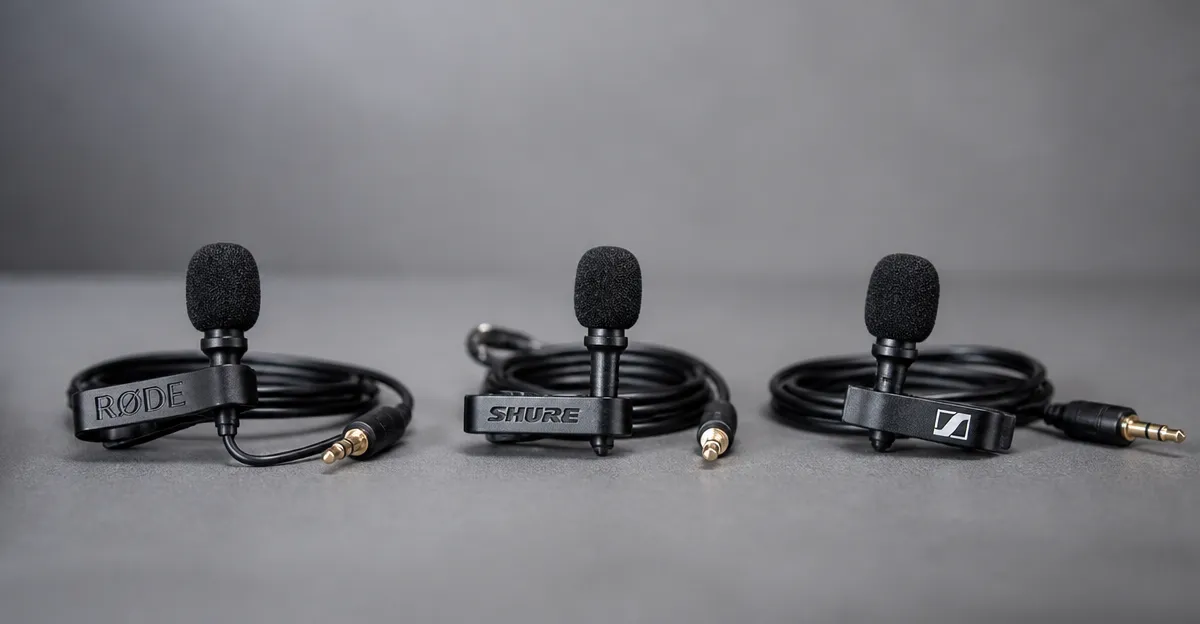
Choosing a lavalier microphone requires careful analysis of several factors, including audio quality, build durability, connectivity options and overall cost. The market offers a range of models from established manufacturers such as Rode, Shure and Sennheiser. This article evaluates five popular Amazon listings, explains why each device may suit particular production scenarios, and provides a data‑driven recommendation for readers who prioritize space, power, compatibility or budget constraints.
All information presented originates from the product listings and verified customer feedback. No assumptions beyond the supplied data are made. The comparison focuses on dimensions that influence professional and semi‑professional workflows, such as omnidirectional versus cardioid polar patterns, cable reinforcement, accessory kits and integration with wireless systems.
Individual Product Overviews
Rode Lavalier GO
The Rode Lavalier GO is a professional‑grade wearable microphone designed for broadcast, filmmaking and streaming applications. It features a 4.5 mm omnidirectional capsule, a 1.2 m Kevlar‑reinforced cable and a foam pop shield that reduces wind noise and plosives. The standard 3.5 mm TRS connector enables direct pairing with the Rode Wireless GO system as well as most cameras and audio interfaces. At a price of $59.14 the unit has earned a 4.6‑star rating from 5,224 reviewers.
Positive customer comments note the microphone’s clear voice capture even in noisy environments and the durability of the Kevlar cable. One reviewer stated, "Very, very pleased. At $58, there may be cheaper ways to produce indistinguishable‑to‑me results, but I have no regrets at all." The package includes a storage bag, though a hard case was suggested as an improvement.
Shure Centraverse CVL
The Shure Centraverse CVL is a condenser lavalier microphone aimed at presentations and public speaking. It employs a unidirectional cardioid polar pattern that rejects off‑axis noise, and it includes a windscreen to minimise plosives. The microphone connects via a TA4F (TQG) connector that integrates seamlessly with Shure wireless systems. Priced at $54.00, it holds a 4.6‑star rating from 1,293 reviews.
Reviewers appreciate the plug‑and‑play experience and the clear vocal reproduction. One user reported, "This mic works very well so far. It was plug and play. Sounds better than the original Shure mic." The design is low‑visibility, making it suitable for on‑stage use where discretion is required.
Rode Lavalier II
The Rode Lavalier II represents a premium offering with an ultra‑low‑profile design, flat cable and omnidirectional polar pattern. It ships with a comprehensive accessory kit that includes a pop filter, furry windshield, colored ID rings and a zip case. The microphone is optimized for use with the Rode Wireless GO II and AI‑Micro systems, though it may require adapters for direct phone or camera connections. The unit costs $102.17 and carries a 4.5‑star rating from 495 reviewers.
Customers highlight the crystal‑clear sound, robust construction and effective wind noise reduction. A motorcyclist reviewer wrote, "The RØDE Lavalier II offers crystal‑clear audio and the background noise reduction is top‑notch, even at highway speeds." The flat cable and locking connector are praised for preventing accidental disconnection during vigorous activity.
Sennheiser ME 2
The Sennheiser ME 2 is an omnidirectional lavalier microphone intended for use with Sennheiser Evolution Wireless SK bodypack transmitters. It operates at 7.5 V and has an equivalent noise level of 36 dB, delivering a clear mid‑high tone boost. The price is $139.00, and the product holds a 4.4‑star rating from 216 reviews.
Users note the microphone’s reliability in church and conference settings. One reviewer stated, "The clarity and reproduction quality is extremely good," while another warned that the omnidirectional pattern will capture ambient room tone, which may be undesirable in noisy environments.
Shure MVL
The Shure MVL is a miniature omnidirectional condenser lavalier designed for mobile devices with a 3.5 mm TRRS connector. It includes a windscreen, tie‑clip mount and a carrying pouch. Priced at $76.00, it has a 4.2‑star rating from 657 reviews.
Positive feedback emphasizes its suitability for vlogging and dictation, with one user noting, "Works great for dictation, picks up quiet voices extremely well." However, a negative review reported a unit failure after three uses and expressed frustration with the warranty process.
Head-to-Head Comparison
Price and Value
When evaluating cost against feature set, the Shure Centraverse CVL provides the lowest price at $54.00 while still delivering a cardioid pattern and wireless integration. The Rode Lavalier GO follows closely at $59.14, offering a Kevlar‑reinforced cable and a pop shield. The Shure MVL sits at $76.00 and adds mobile device compatibility, but its mixed reliability may affect perceived value. The Rode Lavalier II, at $102.17, commands a premium for its low‑profile design and extensive accessory kit. The Sennheiser ME 2 is the most expensive at $139.00, justified primarily by its use with professional wireless bodypacks.
Features and Specifications
All five microphones include omnidirectional capsules except the Shure Centraverse CVL, which uses a cardioid pattern to reject off‑axis noise. The Rode Lavalier GO and Rode Lavalier II share a 3.5 mm TRS connector, but the II adds a locking connector and a flat cable for concealment. The Shure MVL employs a TRRS connector for direct mobile phone use, whereas the Shure Centraverse CVL uses a TA4F connector tailored to Shure wireless systems. The Sennheiser ME 2 operates at 7.5 V and specifies an equivalent noise level of 36 dB, indicating low self‑noise.
Customer Ratings and Feedback
Both the Rode Lavalier GO and Shure Centraverse CVL hold the highest average rating of 4.6 stars, reflecting broad satisfaction. The Rode Lavalier II maintains a solid 4.5‑star rating, with reviewers frequently citing durability and sound clarity. The Sennheiser ME 2’s 4.4‑star rating is supported by praise for its clarity in worship environments, though some users caution about omnidirectional pickup of ambient noise. The Shure MVL’s 4.2‑star rating is the lowest, influenced by isolated reports of unit failure and warranty complications.
Performance and Reliability
Reliability appears strongest for the Rode Lavalier GO, which benefits from a Kevlar‑reinforced cable that withstands rigorous shoots. The Rode Lavalier II receives commendation for vibration resistance on motorcycles, indicating high durability under extreme conditions. The Shure Centraverse CVL is praised for consistent performance in church and mosque settings, suggesting reliable operation in continuous use. The Sennheiser ME 2 is valued for its stable performance in weekly worship services, though its omnidirectional nature may capture unwanted noise. The Shure MVL, while offering good sound for mobile recording, has at least one documented failure after limited use.
Size, Power, Compatibility and Price
In terms of size, the Rode Lavalier II’s ultra‑low‑profile design is the most discreet, followed by the Shure MVL’s miniature housing. Power requirements are minimal for all models except the Sennheiser ME 2, which requires 7.5 V from the bodypack transmitter. Compatibility varies: the Rode Lavalier GO and II excel with Rode Wireless GO series; the Shure Centraverse CVL integrates with Shure wireless transmitters; the Shure MVL targets smartphones and tablets; the Sennheiser ME 2 is limited to Sennheiser Evolution Wireless SK systems.
Comparison Table
| Feature | Rode Lavalier GO | Shure Centraverse CVL | Rode Lavalier II | Sennheiser ME 2 | Shure MVL |
|---|---|---|---|---|---|
| Price (USD) | 59.14 | 54.00 | 102.17 | 139.00 | 76.00 |
| Rating (Stars) | 4.6 | 4.6 | 4.5 | 4.4 | 4.2 |
| Polar Pattern | Omnidirectional | Cardioid (unidirectional) | Omnidirectional | Omnidirectional | Omnidirectional |
| Connector | 3.5 mm TRS | TA4F (TQG) | 3.5 mm TRS (locking) | 3.5 mm (bodypack) | 3.5 mm TRRS |
| Cable Length | 1.2 m (Kevlar reinforced) | Not specified | Flat cable, length not specified | Standard length, not specified | Short mobile cable |
| Included Accessories | Foam pop shield, mounting clip | Windscreen, tie clip | Pop filter, furry windshield, ID rings, zip case | None listed | Windscreen, carrying pouch, tie clip |
Pros & Cons
Rode Lavalier GO
- Pros: Kevlar‑reinforced cable, omnidirectional capsule, high rating, low price.
- Cons: No rotation on clip, requires TRS to TRRS adapter for some smartphones.
Shure Centraverse CVL
- Pros: Cardioid pattern rejects background noise, seamless Shure wireless integration, very affordable.
- Cons: Limited to Shure ecosystem, cable length not disclosed.
Rode Lavalier II
- Pros: Ultra‑low profile, extensive accessory kit, locking connector, excellent wind protection.
- Cons: Higher price, may require adapters for direct camera use.
Sennheiser ME 2
- Pros: High‑quality omnidirectional sound, designed for professional wireless bodypacks, robust mid‑high tone.
- Cons: Most expensive, omnidirectional pickup can capture unwanted room ambience.
Shure MVL
- Pros: Direct mobile device connection, compact size, includes windscreen and pouch.
- Cons: Reported unit failures, warranty process considered cumbersome.
Recommendations
If space is the primary constraint, the ultra‑low‑profile Rode Lavalier II offers the smallest visual footprint while still delivering broadcast‑grade audio. For users who require minimal power consumption and a simple plug‑and‑play solution for smartphones, the Shure MVL provides a dedicated TRRS connector and a compact housing.
When compatibility with existing wireless systems is essential, the Rode Lavalier GO pairs effortlessly with the Rode Wireless GO series, and the Shure Centraverse CVL integrates with Shure wireless transmitters. For budget‑conscious purchasers who still desire a cardioid pattern, the Shure Centraverse CVL at $54.00 offers the best value.
In scenarios where absolute audio fidelity and professional accessories are required, the Rode Lavalier II justifies its higher price. Conversely, the Sennheiser ME 2 is the optimal choice for users already invested in the Sennheiser Evolution Wireless ecosystem.
FAQ
- Can the Rode Lavalier GO be used directly with a smartphone? Yes, but a TRS‑to‑TRRS adapter is required because the microphone supplies a 3.5 mm TRS output while most smartphones expect a TRRS input.
- What is the difference between omnidirectional and cardioid patterns? An omnidirectional capsule captures sound equally from all directions, which is advantageous for movement but also records ambient noise. A cardioid pattern is more directional, reducing background sounds and focusing on the speaker.
- Is the Shure MVL compatible with iOS devices? The MVL includes a 3.5 mm TRRS connector that works with any iPhone or iPad that retains a headphone jack, or with adapters for newer models that use Lightning.
- Do any of these microphones require external power? The Sennheiser ME 2 requires 7.5 V supplied by the Evolution Wireless SK bodypack. All other models are passive and draw power from the host device.
- Which microphone includes the most accessories? The Rode Lavalier II provides the most extensive accessory kit, featuring a pop filter, furry windshield, colored ID rings and a zip‑up case.
- Are any of these microphones suitable for high‑wind outdoor recording? Both the Rode Lavalier GO and Rode Lavalier II include foam or furry windshields that mitigate wind noise, making them suitable for outdoor use.
- How does price correlate with durability? Higher‑priced models such as the Rode Lavalier II and Sennheiser ME 2 generally incorporate more robust construction and premium materials, which is reflected in user reports of longer lifespan under demanding conditions.
Conclusion
The five lavalier microphones reviewed each excel in distinct categories. The Rode Lavalier GO delivers exceptional value for users of the Rode Wireless GO ecosystem, while the Shure Centraverse CVL offers the most affordable cardioid solution for presenters. The Rode Lavalier II stands out for its discreet design and professional accessory bundle, justifying its premium price. The Sennheiser ME 2 remains the top choice for dedicated Sennheiser wireless setups despite its higher cost and omnidirectional pickup. Finally, the Shure MVL provides a convenient mobile‑first option, though reliability concerns warrant caution.
Overall, the best selection depends on the specific constraint. For minimal visual footprint and superior wind protection, the Rode Lavalier II is recommended. For tight budgets and cardioid performance, the Shure Centraverse CVL is the optimal pick. All recommendations are linked to their Amazon listings for easy purchase.
Products Mentioned in This Review
Frequently Asked Questions
What are the key factors to consider when choosing a lavalier microphone?
Look at audio quality, polar pattern, build durability, connectivity, accessory kit, and price to match your production needs.
How does the Rode Lavalier GO differ from the Sennheiser ME 2‑II?
The Rode GO uses an omnidirectional capsule and a compact design for easy on‑camera use, while the Sennheiser ME 2‑II offers a cardioid pattern and stronger wireless integration.
Is the Shure MVL suitable for streaming setups?
Yes, the Shure MVL provides clear omnidirectional pickup and a 3.5 mm plug that works with most consumer cameras and computers.
Which lavalier mic offers the best value for budget‑conscious creators?
The Rode Lavalier GO typically balances professional sound quality with a lower price point, making it a cost‑effective choice.
Can these lavalier microphones be used with wireless transmitter systems?
All three models—Rode GO, Shure MVL, and Sennheiser ME 2‑II—are compatible with standard wireless transmitters that accept 3.5 mm inputs.