Introduction
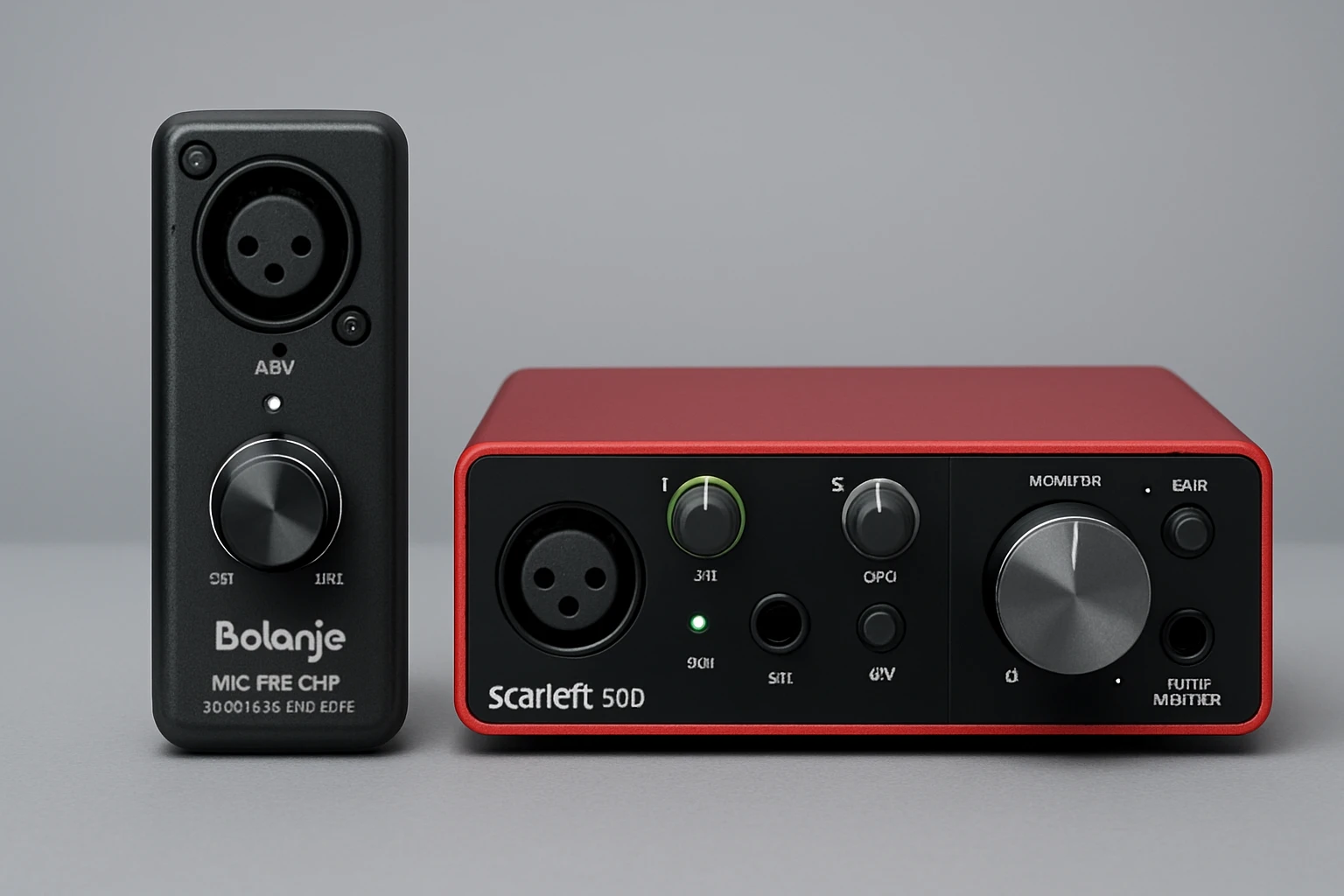
The audio recording market offers a wide range of devices that promise to improve signal quality and workflow efficiency. This article compares two Amazon‑listed products that target overlapping but distinct user groups: the Bolanje Mic Preamp 28dB XLR Adapter and the Focusrite Scarlett Solo 3rd Gen. Understanding their specifications, pricing, and real‑world performance helps potential buyers select the device that best matches their recording needs.
Both products are positioned for home studios, podcast creators, and musicians who require clean gain and reliable connectivity. However, the preamp is a passive gain device designed to boost dynamic microphones, while the Scarlett Solo is a full‑featured USB audio interface that includes a preamp, analog‑to‑digital conversion, and software bundles. The following sections examine each product individually before measuring them side by side.
Individual Product Overviews
Bolanje Mic Preamp 28dB XLR Adapter
The Bolanje Mic Preamp offers a Class A transistor amplification circuit that provides 28dB of gain without compromising signal integrity. Its gold‑plated copper pins and ferrules reduce oxidation and interference, while the alloy‑shielded metal case blocks electromagnetic noise. The unit is compatible with 48V phantom power, allowing it to power condenser microphones and enhance the output of low‑sensitivity dynamic mics such as the Shure SM7B and SM58.
Customer feedback highlights its ability to raise microphone output to line level without adding hiss. One reviewer noted, "Worked well to boost the output of my mic without adding distortion or hiss," while another praised its performance with an SM58 when paired with a phantom‑powered mixer. Negative comments mention a single‑unit packaging error and occasional over‑gain that can cause clipping.
Focusrite Scarlett Solo 3rd Gen USB Interface
The Scarlett Solo 3rd Gen is a compact USB audio interface that delivers 24‑bit/192kHz conversion and includes a high‑performance microphone preamp with a switchable Air mode for added brightness. It provides a high‑impedance instrument input, balanced outputs, and gain‑Halo metering to assist users in setting optimal levels. The device draws power directly from the USB connection, eliminating the need for an external power supply.
Reviewers consistently commend its low‑noise performance and robust build quality. A user stated, "It is a straight plug and play. Works fantastic on every DAW I've ran it through," and another highlighted the inclusion of a comprehensive software bundle that adds value for producers and podcasters. Some criticism focuses on packaging protection and the learning curve associated with the bundled software.
Head‑to‑Head Comparison
Price and Value
The Bolanje Mic Preamp is priced at $32.99, representing a modest investment for users who already own a compatible audio interface or mixer. In contrast, the Scarlett Solo commands a price of $110.25, reflecting its broader functionality, built‑in converters, and software suite. When evaluating value, the preamp excels for those who need a simple gain boost, whereas the Scarlett Solo offers a more comprehensive recording solution at a higher cost.
Features and Specifications
The preamp provides 28dB of Class A gain, gold‑plated connectors, and a metal housing that resists electromagnetic interference. Its specifications include >1000MΩ insulation resistance and compatibility with 48V phantom power. The Scarlett Solo features a single upgraded mic preamp with Air mode, 24‑bit/192kHz AD‑DA conversion, balanced outputs, and a high‑headroom instrument input. Additionally, it supplies a software bundle containing Ableton Live Lite, Pro Tools Intro+, and a range of plugins.
Customer Ratings and Feedback
On Amazon, the Bolanje Mic Preamp holds a rating of 4.3 out of 5.0 based on 19 reviews, indicating generally positive reception with some isolated issues. The Scarlett Solo enjoys a higher rating of 4.6 out of 5.0 from 34,019 reviews, suggesting widespread satisfaction among a large user base. Positive remarks for the preamp focus on clean gain and low noise, while negative remarks mention packaging errors. Positive remarks for the Scarlett Solo emphasize low noise, reliable drivers, and the usefulness of the software bundle; negative remarks cite packaging protection and initial setup complexity.
Performance and Reliability
The Bolanje preamp delivers lossless audio amplification, and reviewers confirm that it does not introduce noticeable distortion when used with dynamic microphones. Its metal case contributes to durability, though long‑term reliability data are limited due to the product’s recent market entry. The Scarlett Solo is praised for its low‑noise floor, stable USB connection, and durability across several years of professional use, as reflected in long‑term user anecdotes.
Best Use Cases
Users who already possess a mixer, audio interface, or sound card and require additional gain for low‑output dynamic microphones will find the Bolanje Mic Preamp to be an economical solution. It is especially suitable for podcast hosts who use SM7B‑type microphones and need a portable gain boost. The Scarlett Solo is ideal for solo musicians, singer‑songwriters, and podcasters who need an all‑in‑one recording device with high‑resolution conversion, a built‑in preamp, and a software ecosystem.
Comparison Table
| Feature | Bolanje Mic Preamp 28dB XLR Adapter | Focusrite Scarlett Solo 3rd Gen |
|---|---|---|
| Price (USD) | $32.99 | $110.25 |
| Gain (dB) | 28 dB (Class A) | Variable (preamp with Air mode) |
| Power Requirement | 48 V phantom power compatible | USB‑bus power (no external adapter) |
| Connectivity | XLR male‑to‑female adapter | USB‑C (or USB‑A), 1 × XLR input, 1 × ¼" instrument input, balanced outputs |
| Sample Rate / Bit Depth | Not applicable (pass‑through device) | 24‑bit / 192 kHz |
| Included Software | None | Hitmaker Expansion, Ableton Live Lite, Pro Tools Intro+ |
| Amazon Rating | 4.3 / 5 (19 reviews) | 4.6 / 5 (34,019 reviews) |
Pros & Cons
Bolanje Mic Preamp 28dB XLR Adapter
- Pros: Provides 28 dB of clean gain; gold‑plated connectors reduce signal loss; metal housing blocks interference; inexpensive entry price.
- Cons: Limited to gain function only; requires external phantom power; occasional over‑gain can cause clipping; packaging error reported by some buyers.
Focusrite Scarlett Solo 3rd Gen
- Pros: High‑resolution 24‑bit/192 kHz conversion; built‑in mic preamp with Air mode; USB‑bus power eliminates need for external supply; extensive software bundle adds value.
- Cons: Higher price point; packaging provides minimal shock protection; initial driver installation may be confusing for non‑technical users.
Recommendations
For creators who already own a mixer or audio interface and need a dedicated gain boost for dynamic microphones, the Bolanje Mic Preamp offers a cost‑effective solution. It is particularly appropriate for podcasters using SM7B or SM58 microphones who already have phantom power available. Conversely, musicians and podcasters seeking an all‑in‑one recording platform with high‑quality conversion, a versatile preamp, and a suite of production tools should consider the Focusrite Scarlett Solo. Its USB connectivity and software bundle make it suitable for solo recording, home‑studio production, and on‑the‑go podcasting.
FAQ
- Do I need phantom power for the Bolanje Mic Preamp? Yes, the device is designed to operate with 48 V phantom power, which powers condenser microphones and activates the internal gain circuit.
- Can the Scarlett Solo be used with a laptop without an external power adapter? Absolutely; the interface draws all required power from the USB connection, making it ideal for portable recording setups.
- Is the Bolanje Mic Preamp compatible with both XLR male and female connectors? The unit is an XLR male‑to‑female adapter; it connects a male output from a microphone to a female input on a mixer or interface.
- What software is included with the Scarlett Solo? The package includes Ableton Live Lite, Pro Tools Intro+, and the Hitmaker Expansion, which provides virtual instruments and effects from Antares, Softube, XLN Audio, and more.
- Will the Bolanje Mic Preamp work with a USB audio interface that already has a preamp? Yes, it can be inserted in the signal chain to provide additional gain, but users should monitor levels to avoid clipping.
- How does the noise floor of the Scarlett Solo compare to the preamp? The Scarlett Solo is rated for a very low noise floor, often below –100 dB, whereas the preamp introduces minimal noise due to its Class A design.
- Is the Scarlett Solo suitable for recording electric guitar? The interface includes a high‑headroom instrument input that can capture guitar or bass without distortion, making it suitable for direct‑in recording.
Conclusion
Both the Bolanje Mic Preamp 28dB XLR Adapter and the Focusrite Scarlett Solo 3rd Gen address distinct recording challenges. The preamp excels at providing a clean, high‑gain boost for low‑output dynamic microphones at a low price, while the Scarlett Solo delivers a complete recording solution with high‑resolution conversion, versatile inputs, and a valuable software suite. Buyers should assess whether they require a simple gain device or a full‑featured audio interface. For those who need only additional gain, the Bolanje preamp represents a sensible investment. For creators who desire an all‑in‑one studio engine, the Scarlett Solo offers superior flexibility and long‑term value.
Products Mentioned in This Review
Frequently Asked Questions
What is the main difference between the Bolanje Mic Preamp and the Focusrite Scarlett Solo?
The Bolanje is a passive 28dB XLR gain adapter, while the Scarlett Solo is a USB audio interface that includes a preamp, A/D conversion, and software.
Does the Bolanje Mic Preamp require phantom power?
No, the Bolanje Mic Preamp is passive and does not need phantom power to operate.
Can the Focusrite Scarlett Solo be used as a standalone preamp without a computer?
It can function as an analog preamp, but its USB connectivity and drivers require a computer for full operation.
Which device is better suited for podcasting on a budget?
The Bolanje Mic Preamp is cheaper and ideal for boosting dynamic mics, making it a budget-friendly choice for simple podcast setups.
How does the 28dB gain of the Bolanje preamp affect dynamic microphones?
It provides a noticeable boost in level, helping low-output dynamic mics achieve clearer, louder recordings without added noise.