Introduction
Podcasting has evolved from a niche hobby to a mainstream medium, and the quality of audio often determines whether a listener remains engaged. In 2026, creators expect crystal‑clear sound, low latency, and the ability to connect several microphones simultaneously for interviews, roundtables, and panel discussions. Selecting the right audio interface is therefore essential for both beginners and seasoned producers.
This article presents a curated list of the best multi‑mic audio interfaces currently available on Amazon. Each recommendation is based on real‑world performance, user ratings, and specific features that address the challenges of multi‑person recording. The goal is to provide actionable guidance without turning the text into a sales pitch.
Top 10 Audio Interfaces for Multi‑Mic Podcasting
- Compact Dual‑Channel Solution for Solo and Duo Hosts
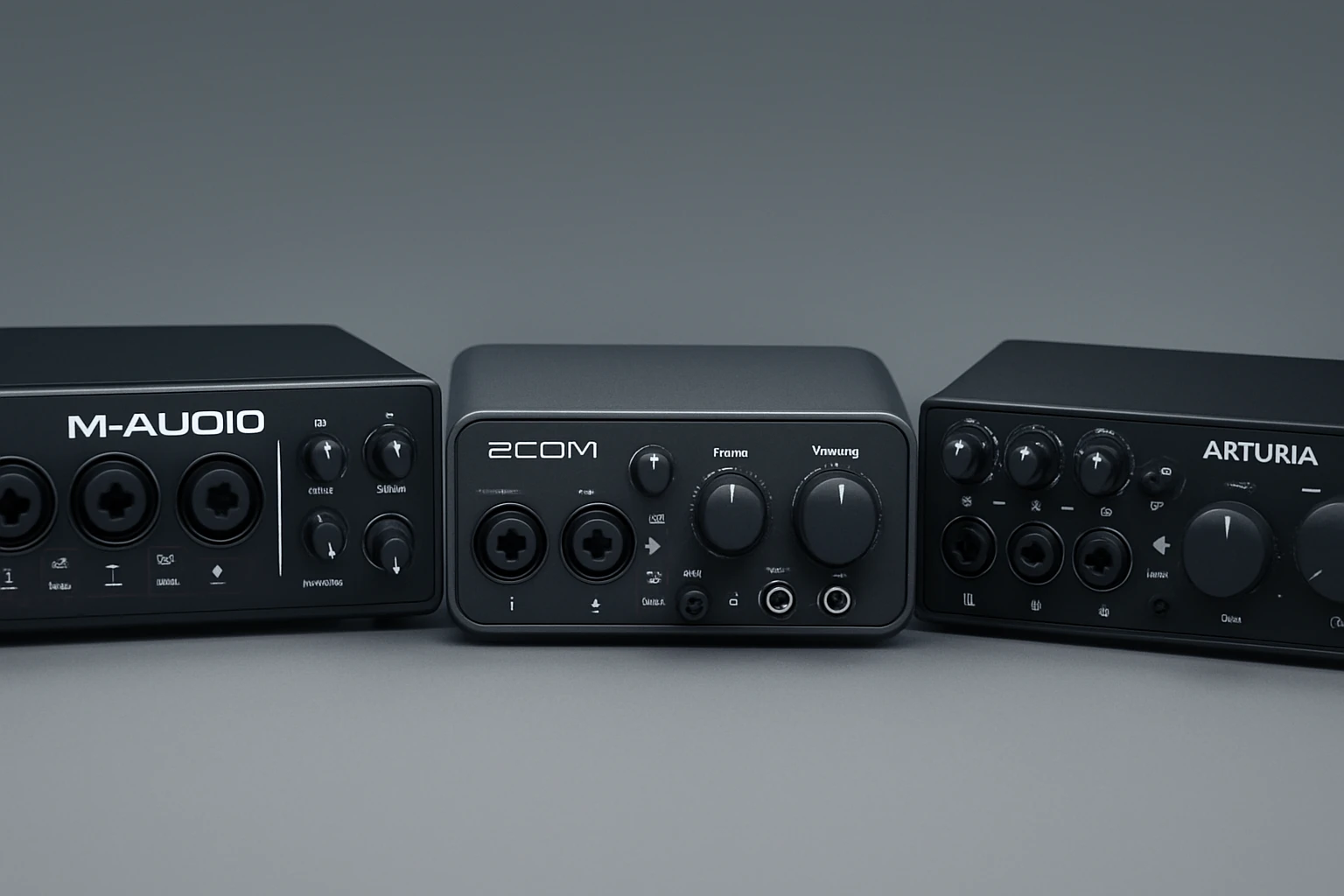
The M‑Audio M‑Track Duo offers two combo XLR/line/instrument inputs, making it ideal for a host and a guest or a dual‑instrument setup. Priced at $69.00 and rated 4.4 out of 5 stars by more than six thousand reviewers, it delivers 48 kHz resolution and includes the MPC Beats software suite. The crystal preamps provide transparent gain, while the USB‑direct switch enables zero‑latency monitoring—an essential feature when multiple speakers need to hear themselves without delay.
- Dual XLR/line/DI inputs with phantom power
- Direct monitoring with USB/Direct balance control
- Included MPC Beats production software
One reviewer noted, “It is an excellent USB sound card that covers all the basics and works flawlessly on Linux,” highlighting its cross‑platform reliability.
- Four‑Channel Portable Recorder for On‑Location Panels
The Zoom PodTrak P4 is designed specifically for podcasters who travel to remote locations or need to record four guests simultaneously. At $149.00 and a 4.7‑star rating from 1,801 reviewers, it provides four high‑quality XLR inputs with phantom power, four independent headphone outputs, and programmable sound pads for effects or music beds.
- Four XLR inputs with individual gain knobs
- Four headphone outputs with separate volume controls
- Built‑in SD‑card recorder and USB audio‑interface mode
- Up to 3.5 hours of operation on two AA batteries
A satisfied user wrote, “The ease of use and portability allow us to record outside the studio without sacrificing sound quality.” The automatic mix‑minus feature simplifies phone interviews, eliminating echo and feedback.
- Robust USB‑C Interface for High‑End Production
The Arturia MiniFuse 2 combines two combo mic/line inputs with MIDI connectivity, making it a versatile choice for podcasters who also produce music or need to integrate synths. Priced at $119.00 and holding a 4.7‑star rating from 2,152 reviewers, it features a 5‑year warranty and a suite of software including Ableton Live Lite and Auto‑Tune Unlimited.
- Two combo XLR/line/inst inputs with 48 V phantom power
- USB‑C powered, eliminating the need for an external power brick
- MIDI In/Out for external controllers
- Loopback function for capturing system audio alongside microphone feeds
One reviewer praised its “instantaneous MIDI response and transparent audio quality,” emphasizing its suitability for hybrid podcast‑music projects.
- Hybrid Setup: Duo Interface Plus Portable Recorder
When a podcast requires both high‑quality studio recording and field flexibility, pairing the M‑Audio M‑Track Duo with the Zoom PodTrak P4 creates a hybrid workflow. The Duo handles primary vocals and instrument tracks in a controlled environment, while the PodTrak P4 captures on‑site interviews with up to four participants. Together they cover the entire production pipeline without significant additional investment.
Both devices support USB connectivity, allowing seamless switching between a laptop‑based DAW and a standalone recorder. Users have reported that this combination “covers all the basics” while still providing the portability needed for remote recordings.
- Multi‑Mic Studio Rig with MIDI Integration
For podcasters who also produce musical segments, the Arturia MiniFuse 2 serves as the central hub. Its MIDI ports enable direct connection to keyboards, drum machines, or even a hardware sampler that can generate intros, transitions, or background music. The included software bundle further simplifies this workflow, offering ready‑made loops and synth patches.
Coupling MiniFuse 2 with a pair of studio monitors creates a professional‑grade environment where each microphone channel can be panned, EQ‑ed, and processed independently, ensuring that roundtable discussions sound balanced and immersive.
- Budget‑Friendly Four‑Mic Solution
Podcasters on a tight budget often consider the Zoom PodTrak P4 as a cost‑effective alternative to larger mixers. Its price point of $149.00 is lower than many entry‑level audio interfaces that provide fewer inputs. The four programmable sound pads also replace the need for an external effects processor, allowing quick insertion of jingles or sponsor messages.
Customer feedback highlights the “small size” and “tactile knobs,” which make real‑time adjustments during live recordings straightforward.
- Travel‑Ready Duo for Mobile Content Creators
The M‑Audio M‑Track Duo’s USB‑bus power eliminates the need for a separate power adapter, making it an excellent companion for creators who travel with a laptop and a microphone. Its lightweight design fits into a backpack alongside a compact camera, enabling on‑the‑go podcast episodes or vlog‑style interviews.
One reviewer noted that the interface “works right off the bat on Linux,” underscoring its broad operating‑system compatibility—a valuable trait for creators using a variety of platforms.
- All‑In‑One Recorder for Small Studios
When space is limited, the Zoom PodTrak P4 can function both as an audio interface and a standalone recorder. By connecting it to a computer via USB, podcasters gain access to DAW plugins while retaining the ability to record directly to an SD card as a backup. This redundancy is especially important for live interviews where internet connectivity may be unreliable.
The built‑in mix‑minus circuit ensures that callers do not hear their own voice, a common source of distraction in remote interviews.
- Professional‑Grade Interface with Extended Warranty
The Arturia MiniFuse 2 distinguishes itself with a five‑year warranty, reflecting the manufacturer’s confidence in build quality. For podcasters who anticipate years of use, this long‑term protection reduces the risk of unexpected replacement costs.
Its robust metal chassis and reinforced USB‑C port provide durability comparable to higher‑priced competitors, while still offering a competitive $119.00 price.
- Feature‑Rich Setup for Advanced Post‑Production
Combining the Zoom PodTrak P4’s multi‑track recording capability with the MiniFuse 2’s loopback feature gives editors maximum flexibility. Individual tracks can be exported from the PodTrak’s SD card, while the MiniFuse 2 captures system audio and MIDI data for seamless integration into post‑production software.
This workflow is praised by users who “record to SD as a safety net” and later “mix the separate stems in a DAW for polished final delivery.”
- Future‑Proof Choice for Expanding Podcast Teams
As podcasts grow from two hosts to larger panels, the need for additional inputs becomes critical. While the M‑Audio M‑Track Duo provides two channels, the Zoom PodTrak P4 scales to four, and the Arturia MiniFuse 2 adds MIDI expansion. Selecting an interface that can accommodate growth prevents the need for premature upgrades.
Investing in a device with extra inputs and software integration ensures that a podcast can evolve without compromising audio quality.
Comparison of Key Specifications
| Interface | Inputs | Outputs | MIDI | Power | Price | Rating |
|---|---|---|---|---|---|---|
| M‑Audio M‑Track Duo | 2 combo XLR/Line/DI | 2 line + 1 headphone | None | USB bus | $69.00 | 4.4/5 (6,258) |
| Zoom PodTrak P4 | 4 XLR (phantom) | 4 headphone + 2 line | None | 2 AA batteries or USB | $149.00 | 4.7/5 (1,801) |
| Arturia MiniFuse 2 | 2 combo XLR/Line/Inst | 2 line + 1 headphone | In/Out 5‑pin | USB‑C bus | $119.00 | 4.7/5 (2,152) |
Conclusion
Choosing the right audio interface depends on the specific demands of a podcast production, including the number of microphones, portability requirements, and future expansion plans. The M‑Audio M‑Track Duo excels as an affordable, compact solution for two‑person setups. The Zoom PodTrak P4 shines for on‑the‑go four‑mic recordings and includes built‑in SD‑card storage. The Arturia MiniFuse 2 offers a balanced blend of audio quality, MIDI integration, and long‑term warranty for creators who blend music and spoken word.
By evaluating budget, input count, and additional features such as loopback or mix‑minus, podcasters can select a device that will sustain high‑quality production for years to come.
Frequently Asked Questions
What features should I look for in a multi‑mic audio interface for podcasting?
Prioritize multiple XLR inputs, low latency, phantom power, and direct monitoring to ensure clear, real‑time sound for several hosts.
Can a budget‑friendly interface like the M‑Audio M‑Track Duo handle two microphones effectively?
Yes, its two combo XLR/line inputs and built‑in preamps provide clean gain for a host and a guest at an affordable price.
Why is phantom power important for podcast microphones?
Phantom power supplies the voltage needed by condenser mics, which are common in podcasting for their sensitivity and detail.
Do I need a USB‑C connection on my audio interface?
USB‑C offers faster data transfer and universal compatibility, but USB‑A interfaces still work well if your computer supports them.
How does direct monitoring improve my recording workflow?
Direct monitoring lets you hear the input signal without latency, helping you adjust levels and avoid audio glitches during live sessions.